AI Chatbots for Lead Generation: A Practical Guide
Listen to this article
Press Play to start listening.
Reader settings

Generating website traffic is only the first step in growing an online business. The real challenge is converting those visitors into qualified leads and, eventually, paying customers.
Many potential customers visit a website, browse a few pages, and leave without completing a contact form or speaking with the sales team. An AI chatbot for lead generation can help businesses engage those visitors while their interest is still high.
AI chatbots can start conversations, answer questions, collect contact information, understand customer requirements, qualify prospects, and guide high-intent visitors toward the next step.
In this practical guide, we'll explore how AI chatbots for lead generation work and how businesses can use them to turn more website visitors into sales opportunities.
What Is an AI Lead Generation Chatbot?
An AI lead generation chatbot is a conversational assistant designed to engage website visitors and collect information that can help identify potential customers.
Instead of displaying only a traditional "Contact Us" form, businesses can allow visitors to have a natural conversation.
For example, a visitor might ask:
Visitor: "Do you create websites for real estate businesses?"
The chatbot can answer the question and continue the conversation:
Chatbot: "Yes. Are you looking for a new website or improvements to an existing website?"
From there, the chatbot can learn more about the visitor's requirements and, at an appropriate point, request their contact information.
This turns passive website browsing into an interactive lead-generation opportunity.
How Do AI Chatbots Generate Leads?
AI chatbots can support several stages of the lead-generation process.
A typical chatbot lead-generation flow might look like this:
Website Visitor → Conversation → Questions Answered → Requirements Collected → Contact Details Captured → Lead Qualified → Sales Team Follow-Up
Instead of expecting visitors to search the website and complete a long form, the chatbot guides them through the process conversationally.
1. Engage Website Visitors Instantly
Timing is extremely important when generating leads.
When someone arrives on your website, they may already be comparing your products or services with competitors.
An AI chatbot gives visitors an immediate way to ask questions.
Rather than waiting for someone to complete a contact form, the chatbot can proactively help visitors find relevant information.
For example:
"Hi! How can I help you today?"
The visitor can then ask about pricing, services, availability, product features, or another topic.
This creates an opportunity to start a conversation before the visitor leaves.
2. Provide Lead Generation 24/7
Your sales team cannot remain online every hour of every day.
Your website can.
An AI chatbot for business can continue interacting with potential customers outside normal working hours, including evenings, weekends, and holidays.
This is particularly useful for businesses receiving visitors from different countries and time zones.
A potential customer visiting your website at 2:00 AM doesn't necessarily have to wait until the next working day to get basic information.
The chatbot can answer common questions, collect their requirements and capture their contact information for follow-up.
3. Capture Contact Information Naturally
Traditional lead-generation forms often immediately ask visitors for several pieces of information.
For example:
Name
Email
Phone number
Company
Service required
Message
Some visitors may not be ready to provide all this information before they understand what your business offers.
A chatbot can take a more conversational approach.
It can answer the visitor's initial question first and request contact information later when appropriate.
For example:
Chatbot: "Yes, we can help with that. Would you like our team to contact you with more information?"
If the visitor agrees, the chatbot can request their name, email address or phone number.
This can make lead capture feel like part of the conversation rather than another form to complete.
4. Qualify Leads Automatically
Generating a large number of leads isn't always useful if most of them aren't relevant.
An AI lead qualification chatbot can ask questions that help determine whether a visitor is a potential customer.
Depending on your business, qualification questions could include:
What service are you interested in?
What problem are you trying to solve?
What is your approximate budget?
When would you like to get started?
Where are you located?
What type of business do you operate?
Are you looking to purchase now or researching options?
The answers can give your sales team useful context before they contact the lead.
Instead of treating every inquiry equally, businesses can prioritize prospects that appear to have stronger purchase intent.
5. Answer Questions Before Asking for Contact Details
One important mistake businesses should avoid is turning their chatbot into another long contact form.
Visitors usually start conversations because they want information.
Give them value first.
Answer their questions about your products, services, pricing, availability, delivery, or other relevant topics before asking for unnecessary personal information.
A useful chatbot conversation should feel like:
Help → Understand → Qualify → Capture → Convert
rather than:
Name → Email → Phone → Company → Budget → Question
Providing useful information first can create a much better visitor experience.
6. Recommend the Right Product or Service
AI chatbots can also help visitors understand which product or service might suit their requirements.
Imagine a digital agency offering:
Website development
E-commerce development
SEO
Website maintenance
AI chatbot development
A visitor might simply say:
"I want more customers from my website."
Instead of forcing the visitor to understand every service, the chatbot can ask relevant questions and guide them toward an appropriate solution.
Product-based businesses can use a similar approach.
The chatbot can ask about requirements, preferences, price range, or intended use and then direct customers toward relevant products.
7. Identify High-Intent Visitors
Not every website visitor has the same level of buying intent.
Someone reading an educational article may simply be researching.
Someone asking:
"How much does it cost?"
"Can you start this week?"
or
"How do I purchase?"
may demonstrate stronger commercial intent.
An intelligently configured chatbot can use these conversations to help distinguish informational visitors from potential sales opportunities.
High-intent conversations can then be prioritized for human follow-up.
8. Reduce the Workload on Sales Teams
Salespeople shouldn't have to spend most of their time answering the same basic questions.
An AI chatbot can handle repetitive inquiries about:
Pricing
Services
Product features
Availability
Delivery
Locations
Booking procedures
Business hours
Basic policies
Once the visitor has received this information and shown genuine interest, the conversation can move to the sales team.
This allows sales representatives to spend more time speaking with qualified prospects rather than repeatedly answering basic questions.
9. Create a Better Human Handoff
AI automation shouldn't mean eliminating human communication.
The best lead-generation strategy combines AI chatbot automation with human sales expertise.
The chatbot can manage the beginning of the customer journey by answering questions and collecting information.
When the visitor becomes a qualified prospect or requests human assistance, the conversation can be handed over to the appropriate team member.
The sales representative can then begin the conversation with more context about what the customer needs.
10. Personalize Website Conversations
Static websites usually show the same content to every visitor.
AI chatbots make the experience more interactive.
For example, someone interested in website development can receive information about website development, while someone interested in an AI chatbot can receive information relevant to chatbot automation.
This helps visitors reach useful information faster and creates a more personalized experience.
What Information Should Your Lead Generation Chatbot Collect?
Avoid collecting information simply because you can.
Focus on information your sales team genuinely needs.
Depending on your business, this could include:
Customer name
Email address
Phone number
Company name
Required product or service
Location
Budget range
Project timeline
Specific requirements
Preferred contact method
Your chatbot should collect enough information to make follow-up useful without turning the conversation into an interrogation.
Best Practices for AI Chatbot Lead Generation
Keep Conversations Short and Natural
Don't ask ten questions when three or four can determine whether someone is a suitable lead.
Train the Chatbot on Your Business
Your chatbot should understand your products, services, FAQs, policies, pricing information, and other relevant business information.
A strong chatbot knowledge base helps produce more useful conversations.
Ask One Question at a Time
Avoid overwhelming visitors with multiple questions in a single message.
A conversational flow feels more natural.
Don't Ask for Contact Information Too Early
Provide value before requesting personal details.
Answering the visitor's initial question can help establish trust.
Provide Human Support When Necessary
Customers should have a clear path to human assistance when the chatbot cannot resolve their request.
Keep Your Knowledge Base Updated
If your pricing, services, products, policies, or business information changes, update your chatbot knowledge accordingly.
Common Lead Generation Chatbot Mistakes
Simply adding a chatbot to a website doesn't guarantee more leads.
Avoid these common mistakes:
Asking too many questions
Requesting contact information immediately
Providing generic answers
Using outdated business information
Making conversations feel robotic
Not defining what qualifies as a good lead
Having no clear human handoff process
Collecting leads without a follow-up strategy
Not reviewing chatbot conversations and performance
Your chatbot should help customers—not create another obstacle between them and your business.
Which Businesses Can Use AI Chatbots for Lead Generation?
AI lead generation chatbots can work across many industries.
Examples include:
Real Estate: Capture buyer, seller, tenant and property-viewing inquiries.
Digital Agencies: Qualify businesses interested in web development, SEO, marketing, or automation.
E-commerce: Help shoppers find products and capture interested customers.
Education: Handle course inquiries and collect prospective student information.
Travel: Capture inquiries about destinations, bookings, transportation, and packages.
Professional Services: Qualify prospects before consultations.
Local Businesses: Capture appointment and service inquiries outside working hours.
SaaS Companies: Answer product questions and guide qualified prospects toward demos or sales conversations.
How ChatNestly Can Help With AI Lead Generation
Businesses looking to automate website conversations can use ChatNestly to create an AI chatbot for their website.
ChatNestly can help turn your existing business knowledge into an interactive customer experience where visitors can ask questions and receive immediate assistance.
Instead of allowing interested visitors to leave your website without taking action, your chatbot can engage them, understand their requirements and help move them toward the appropriate next step.
Explore ChatNestly:
You can also learn how to build a stronger chatbot knowledge base:
https://chatnestly.online/blog/what-to-include-chatbot-knowledge-base
A well-trained chatbot combined with a properly structured lead-generation strategy can become an important part of your website's sales funnel.
AI Chatbot vs Traditional Lead Generation Form
A traditional contact form still has value, but it relies on the visitor being ready to take action.
An AI chatbot introduces conversation before conversion.
A visitor can ask questions, understand your business, explain what they need and then decide whether they want to share their contact information.
Businesses don't necessarily need to choose one or the other.
Using both a chatbot and traditional forms can give visitors multiple ways to contact your business.
Final Thoughts
AI chatbots for lead generation can help businesses transform their websites from static information sources into interactive sales channels.
A well-configured chatbot can engage visitors 24/7, answer common questions, capture contact information, qualify prospects, identify customer requirements and help sales teams prioritize valuable opportunities.
However, successful chatbot lead generation isn't about asking every visitor for their email address.
It's about providing useful assistance at the right moment.
Build conversations that help first, qualify naturally, capture relevant information and provide an easy transition to your sales team.
When AI automation and human sales expertise work together, businesses can create a faster and more efficient path from website visitor to qualified lead to customer.
Frequently Asked Questions
Can AI chatbots generate leads?
Yes. AI chatbots can engage website visitors, answer questions, collect contact information and gather details that help businesses identify potential customers.
How do AI chatbots qualify leads?
A chatbot can ask questions about the visitor's requirements, budget, location, timeline, company, or purchase intent. Businesses can use these answers to determine which prospects deserve priority.
Can an AI chatbot replace a contact form?
It can complement or partially replace traditional forms, but offering both options can be useful. Some visitors prefer conversations while others prefer simple forms.
Can AI chatbots work 24/7?
Yes. One major advantage of website chatbots is their ability to provide automated assistance outside normal business hours.
What is the best AI chatbot for lead generation?
The right solution depends on your website, business requirements, knowledge sources, integrations, lead-capture process and desired automation. Businesses looking to add an AI chatbot to their website can explore ChatNestly at https://chatnestly.online/.
About the author
ChatNestly
The ChatNestly Editorial Team shares practical guidance on AI chatbots, customer support automation, lead generation, and building better customer experiences.
Keep reading
Related articles
Oct 15, 2026
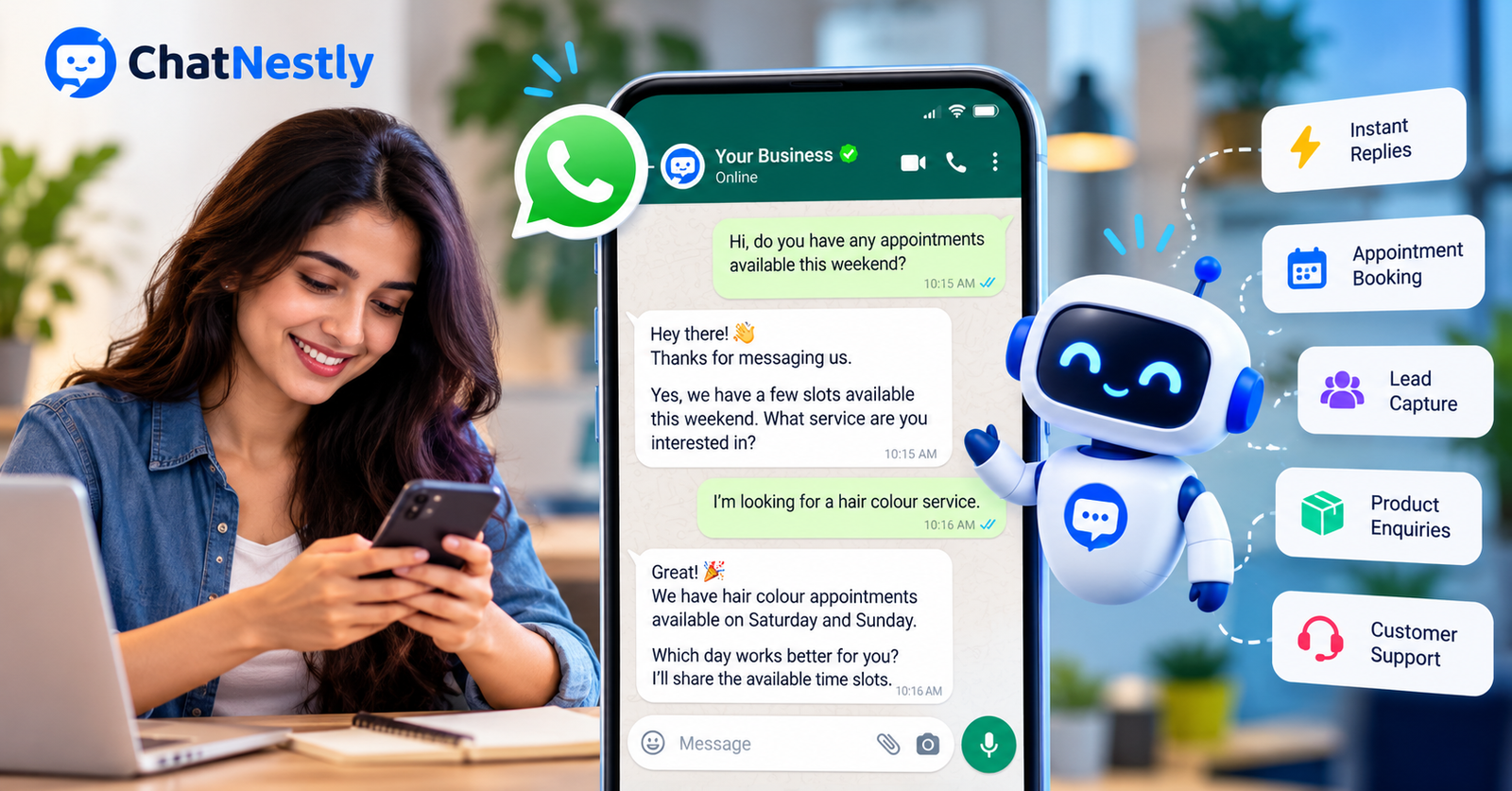
10 WhatsApp Auto Reply Messages for Business That Sound Human
Customers don't arrange their shopping around your working hours. They message when they have a question, and most expect a fairly quick answer.

Sep 28, 2026
AI Chatbot vs AI Agent: What’s the Difference and Which Does Your Business Need in 2026?
A year or two ago, everything was an “AI chatbot.” Now we have AI agents, customer service agents, support agents and autonomous AI. It sounds impressive, but for a business owner trying to improve customer support, it can also make a simple decision unnecessarily confusing.
Sep 16, 2026
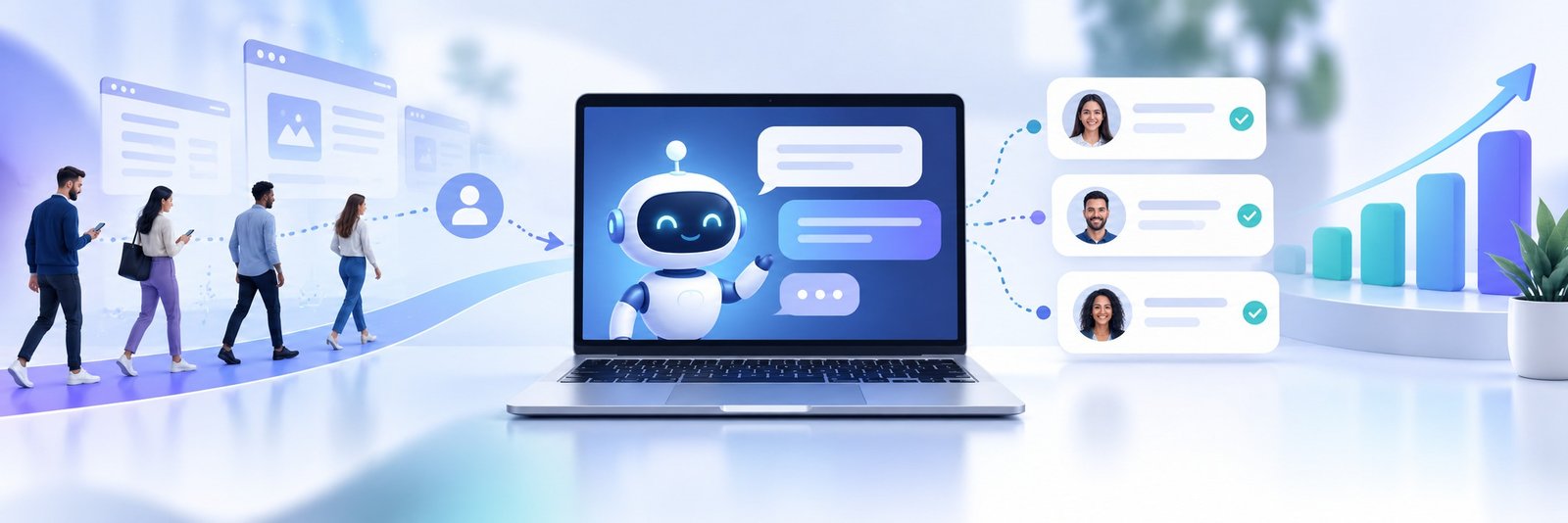
AI Chatbot for Lead Generation: How to Turn Website Visitors Into Leads
Your website may be getting visitors, but that does not mean those visitors are becoming leads. Many people leave because they still have questions about your product, service, price, delivery, or appointment process.